 Posted by
 THE BODEGAS VINIVAL: Camera Obscura – Incubator – Hangar
While the exterior thrives in daylight, we turn inward — to sculpt the space with the quiet poetics of artificial light.
A Social Laboratory for a Participatory and Inclusive Urban Society
Bodegas Vinival‘s architectural quality emerges from the dynamic interplay of scale, materiality, light and programmatic contingency. The former winery has been reimagined as a space with great potential — an arena for new urban programmes that encourage participation, interaction, and collective experiences.
Our conceptual framework is based on the following design principles:
Ambivalent Monumentality
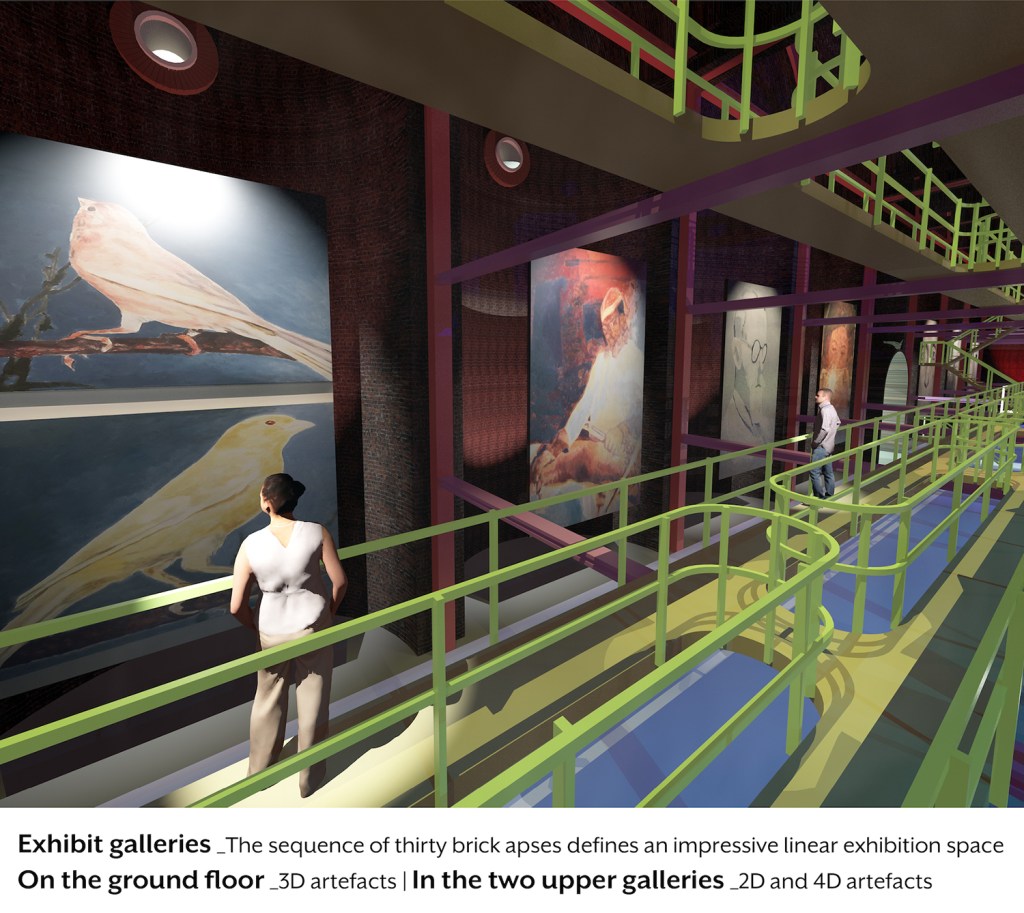
The hermetic, monolithic volume gives the building a quiet, almost introspective monumentality. This is softened by the use of small-format brickwork — a tactile material that lends human scale. A tension emerges between mass and delicacy, enclosure and openness, distance and invitation.
Vertical Horizontality
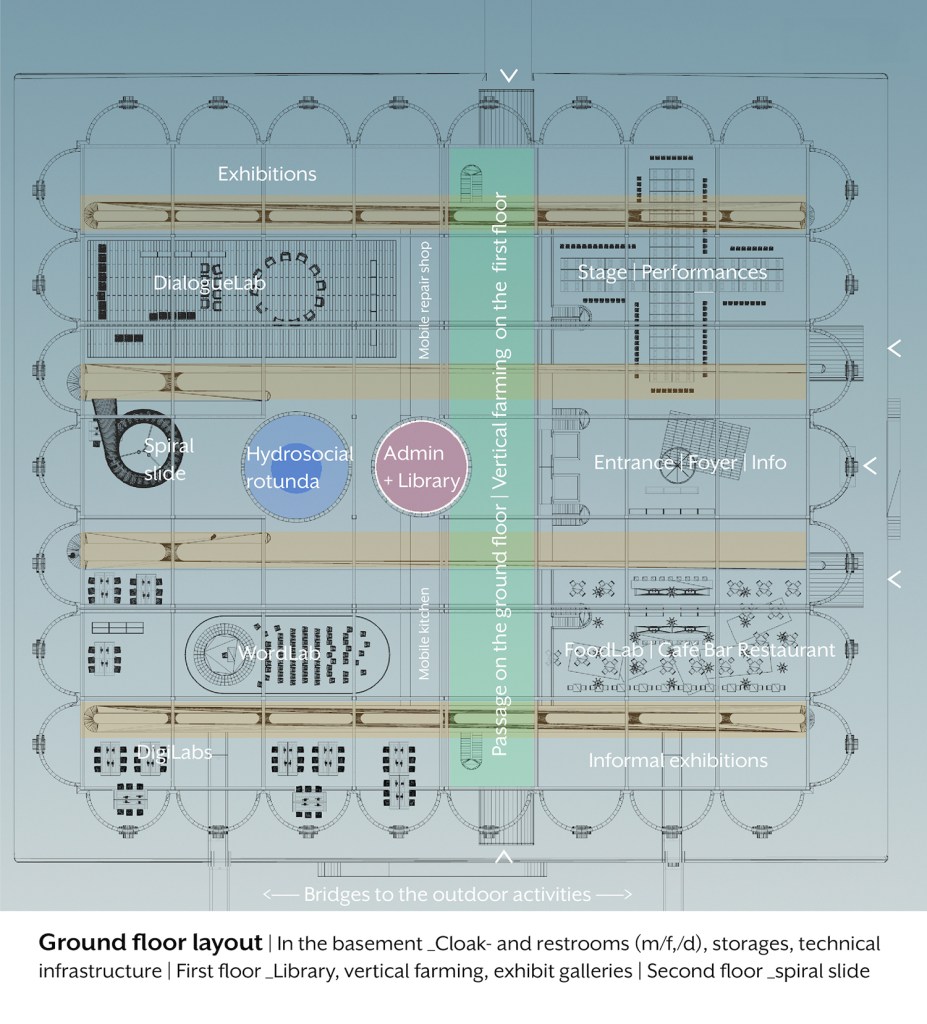
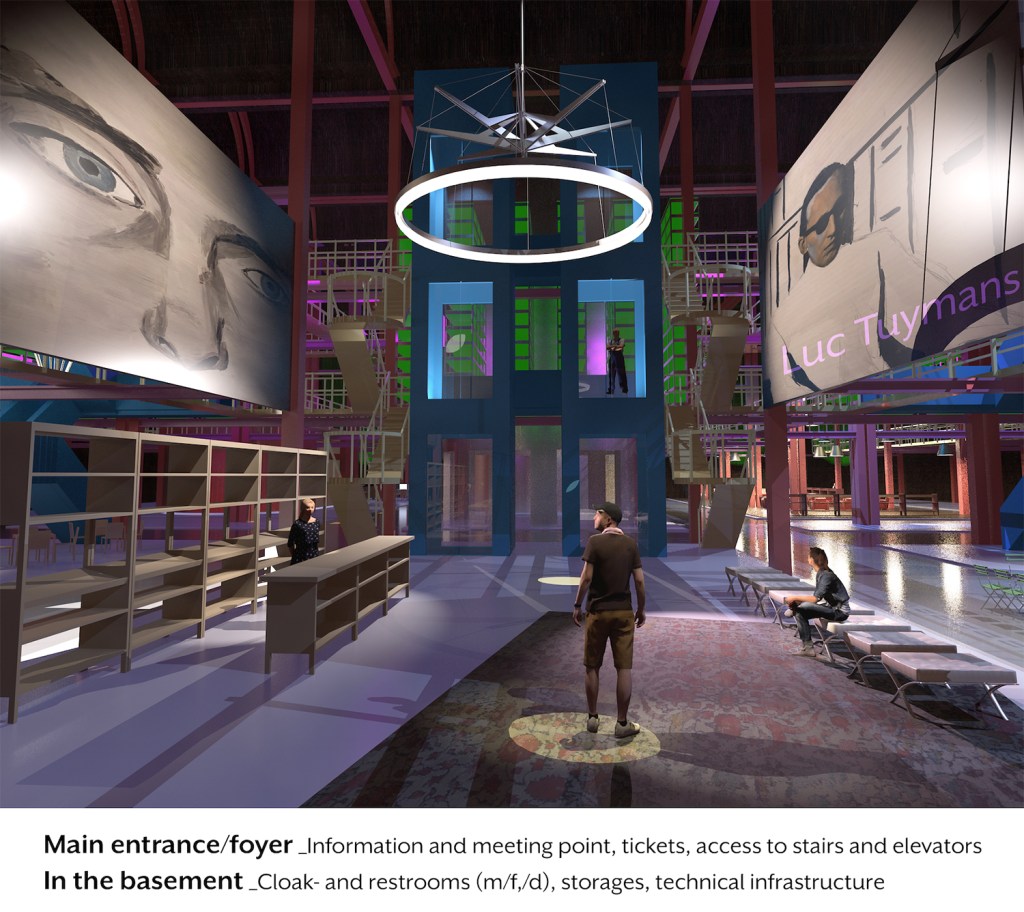
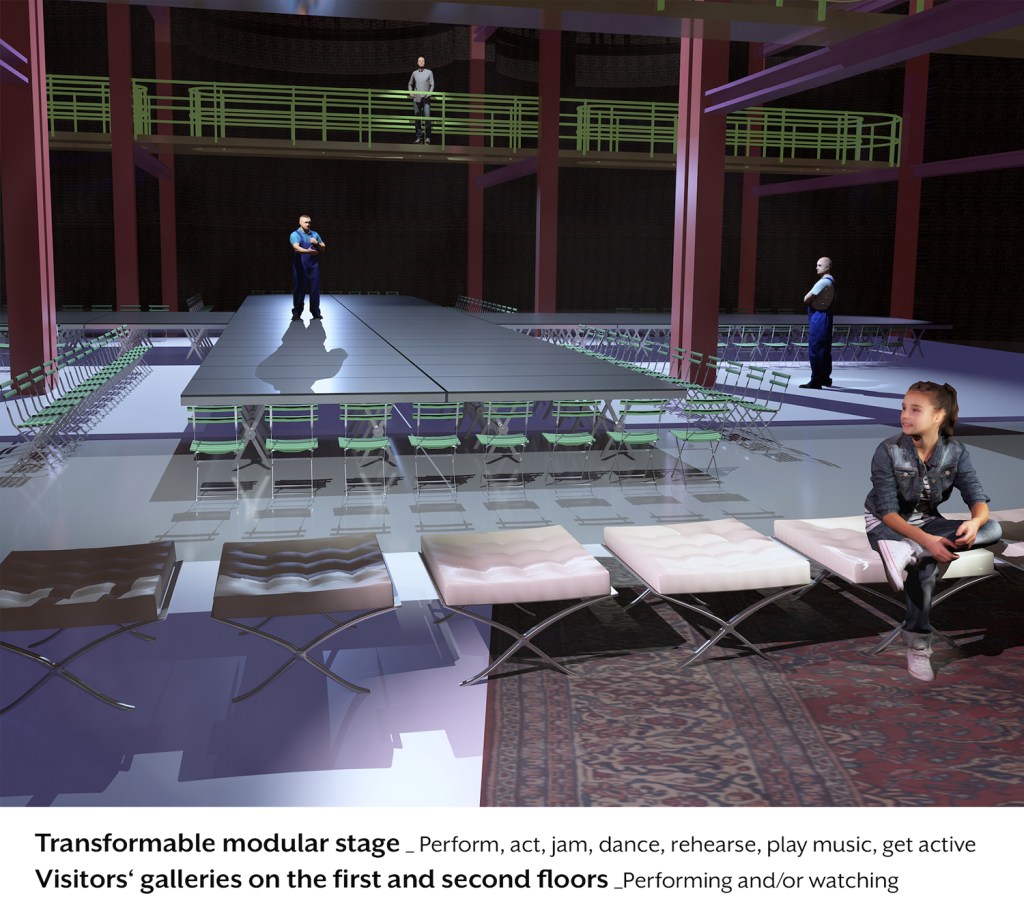
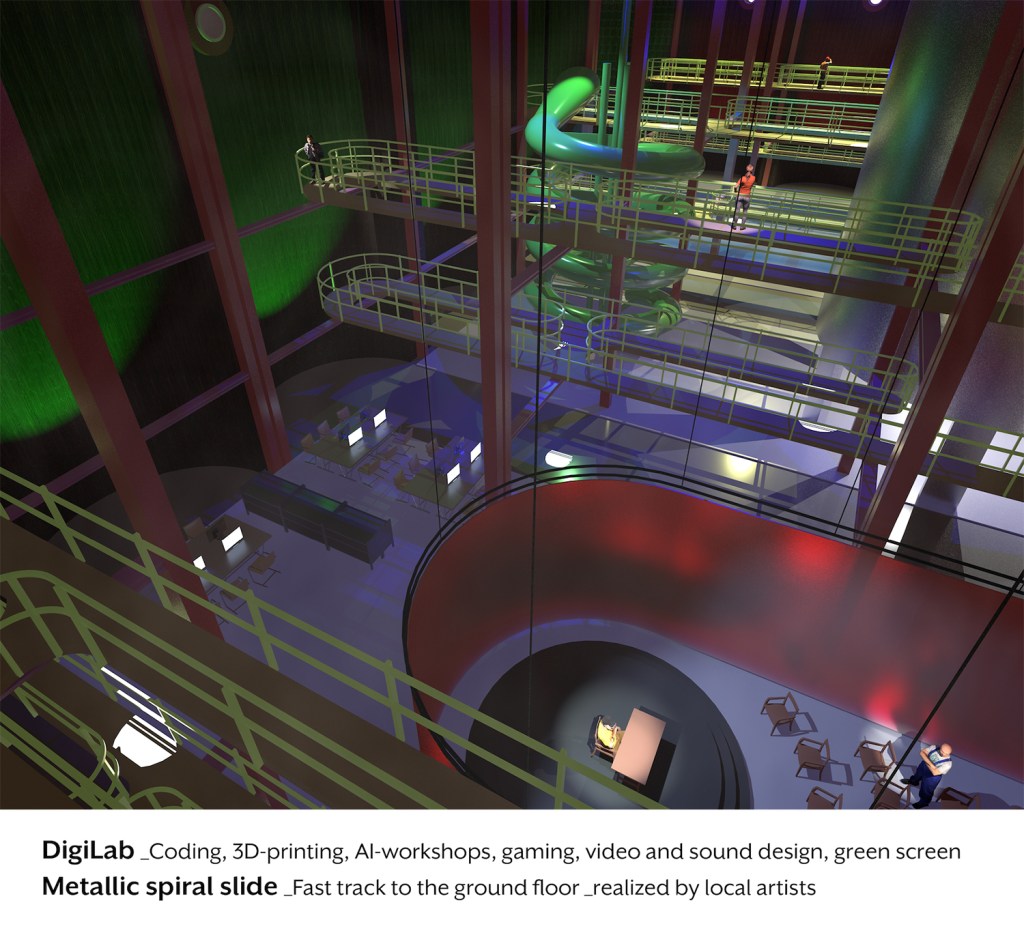
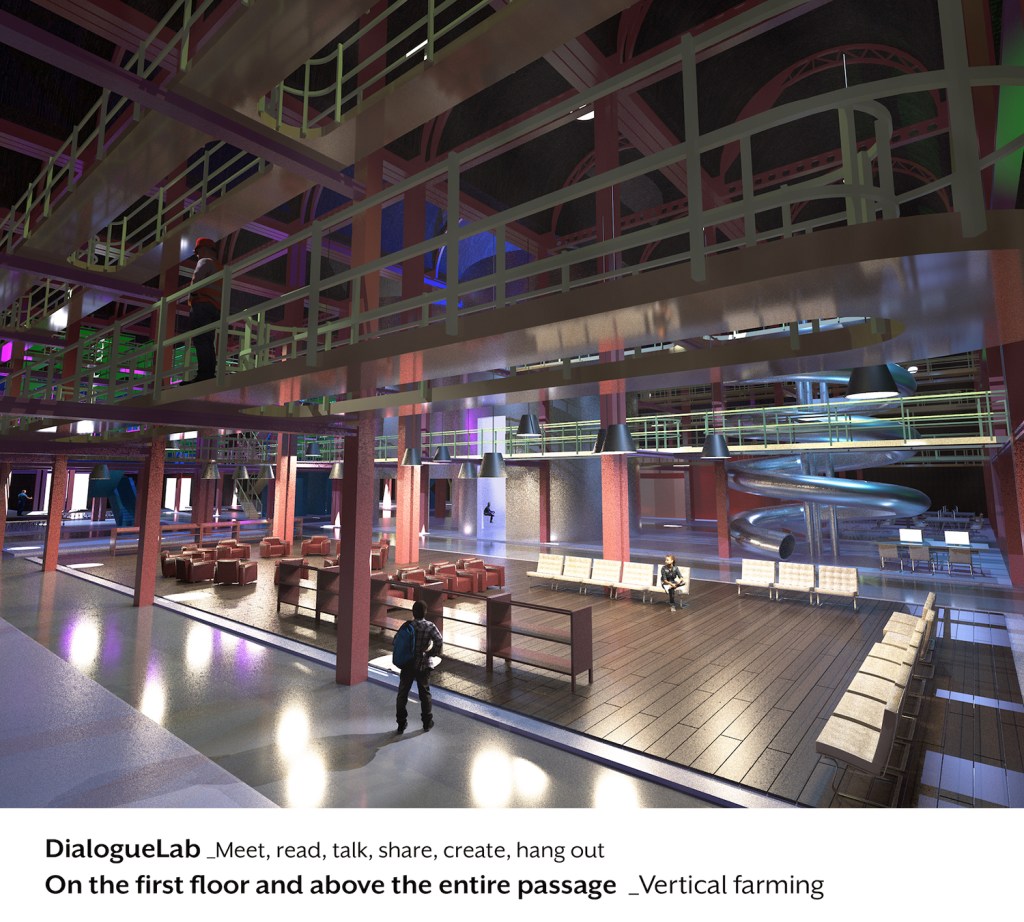
Thirty semicircular towers give the façade a vertical rhythm that is reminiscent of sacred architecture. By contrast, the interior opens onto a vast 4,700 m² hall with an impressive height of 18 metres, evoking the typology of a hangar rather than a wine cellar. This interplay of vertical and horizontal elements gives the space depth and presence. Delicate metal walkways, which were once part of the technical infrastructure, have been retained and now hover like drawn lines in space, subtly structuring the volume and void. However, the original wine tanks will be removed, as they obstruct the visual continuity of the space and have no meaningful programme value.
Light as Dramaturgy
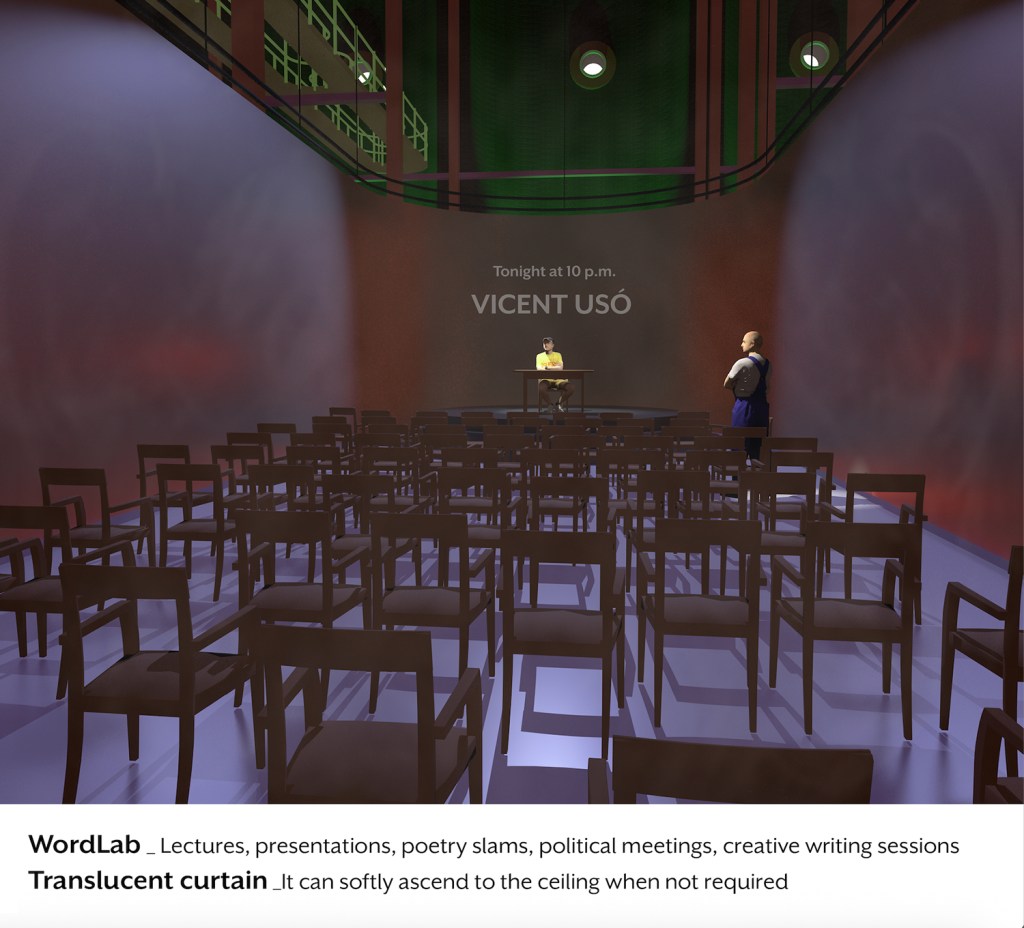
Natural light enters only through small apertures, as though the lightless body of a camera obscura had been perforated. Together with the randomly scattered skylights, this creates a poetic and enigmatic atmosphere of daylight. Rather than being a limitation, this reduced lighting becomes a powerful design feature. A complementary system of artificial light adds layers of zoned illumination and focused ‚light islands‘, enabling temporal and programmatic adaptability — creating spatial stages that can be used by diverse user groups 24/7.
Space for Appropriation – New Babylon
The ground floor remains free of fixed partitions, enabling flexible use and spontaneous encounters. The building acts as a social incubator — a place of informal interaction and open-ended appropriation. In deliberate contrast to urban atomization and digital abstraction, a physical space of presence, density, and lived community emerges — echoing Constant Nieuwenhuys’ New Babylon.
Volume vs. Void | Control vs. Eruption
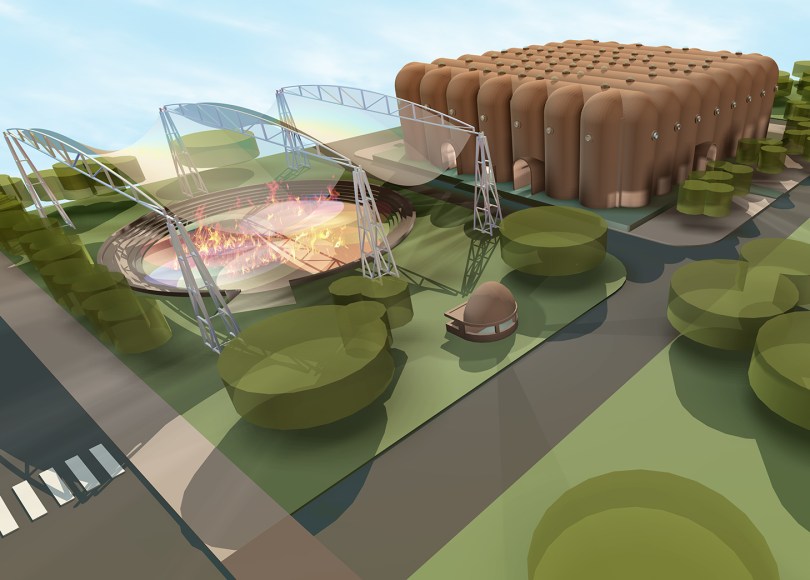
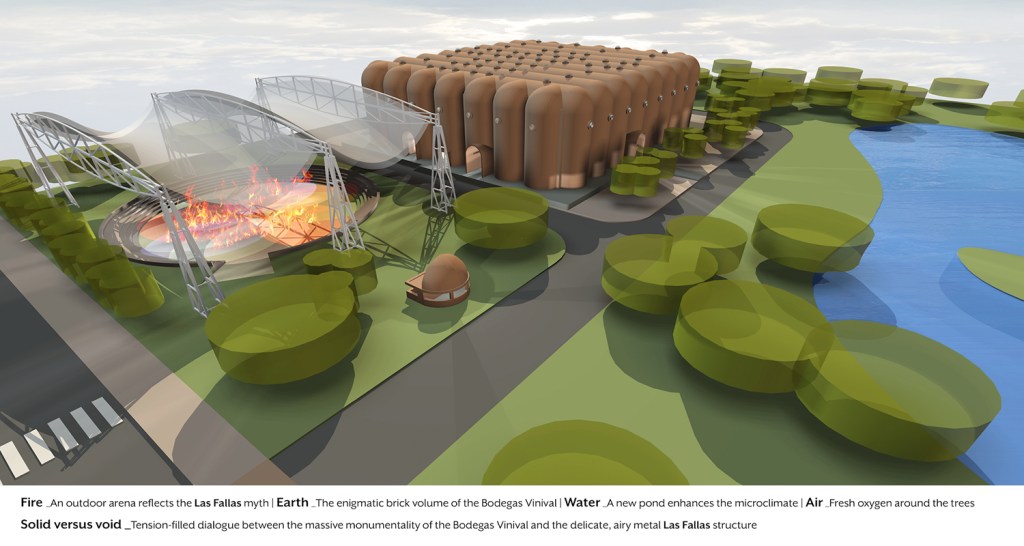
To provide a spatial counterpoint to the enclosed Bodega, an open-air arena has been proposed nearby, set slightly below ground level. Covered by a light, permeable steel structure, the arena offers shelter without enclosure. The contrast between mass and lightness, darkness and openness frames a spatial dialogue of dualities: volume versus void – protection versus exposure. The precisely staged performances in the dimly lit Bodega contrast with the partially archaic wildness of the Las Fallas festivities held in the open-air amphitheatre.
Climate-Responsive Landscape
The transformation of the site includes a tree-filled park and a pond with a central fountain. These landscape elements enhance spatial quality and improve the microclimate and air quality. Nature is not backdrop, but an essential component of a socially and ecologically resilient urban fabric.


 OZA _Studio for Architecture and Scenography