 Posted by
 WHOLESALE MARKET HALL COLOGNE
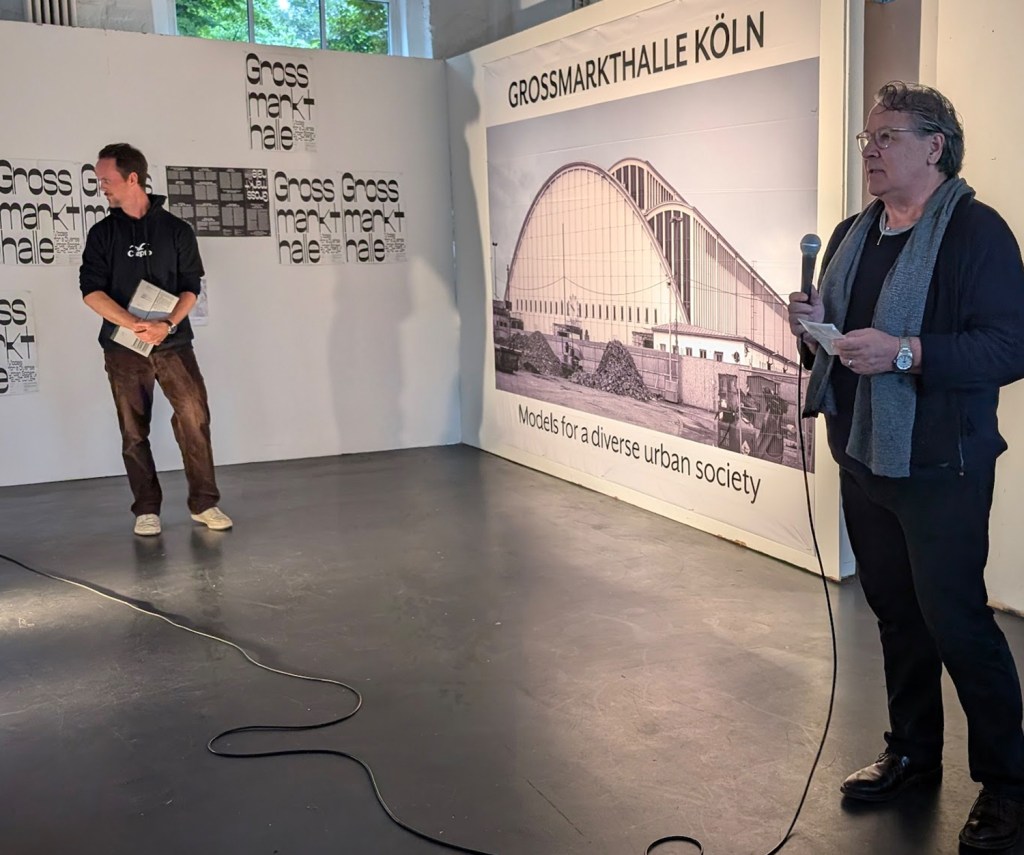
Models for a Diverse Urban society
An exhibition of the »Institute of Media and Design« of the TU Braunschweig
July 2024
https://www.instagram.com/grossmarkthalle_koeln
The Grossmarkthalle Design project was led by Matthias Karch with Mohammad Reza Abdollahi Bidhendi and Max Justus Hoven
Exhibition design and curation _Matthias Karch
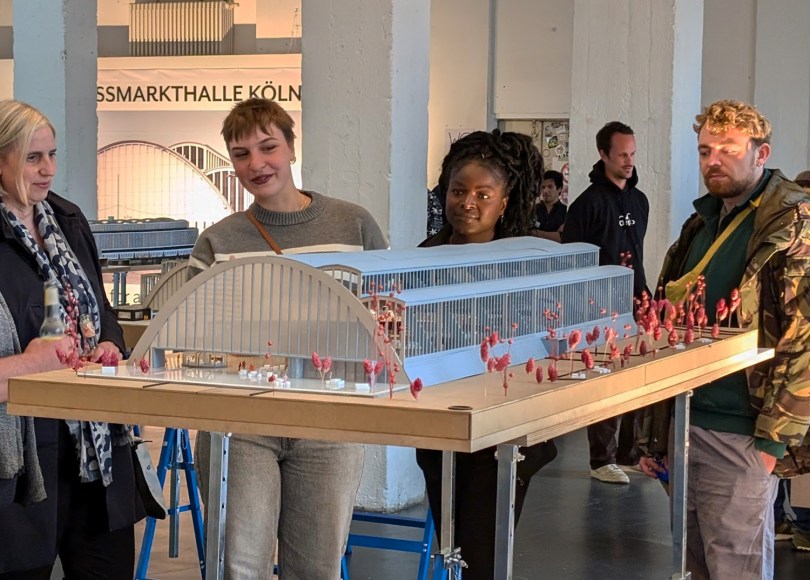
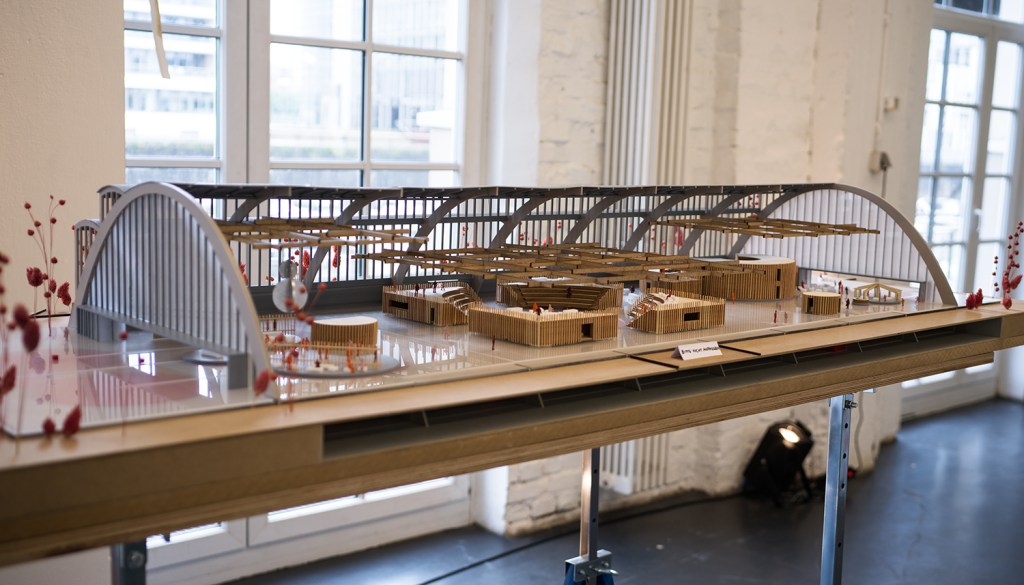
Completed in 1940, Ulrich Finsterwalder and Theodor Teichen‘s Wholesale Market Hall is still Cologne‘s central fruit and vegetable trading hub. Its innovative shell construction with a column-free area of 7.500 square meters and a span of 57 meters is still fascinating today. As part of the planned extension of the Inner Green Belt to the Rhine, the new district »Parkstadt Süd« will soon be built around the Großmarkthalle. It will include apartments, offices, commercial space, daycare centers, schools, and leisure, play, and sports facilities. The wholesale market will therefore be moved to a new location, probably to Cologne-Marsdorf. This opens up a unique opportunity for a programmatic transformation of the heritage listed hall. According to the current plans, the hall will then be located in the center of the new district.
Models for a Diverse Urban society
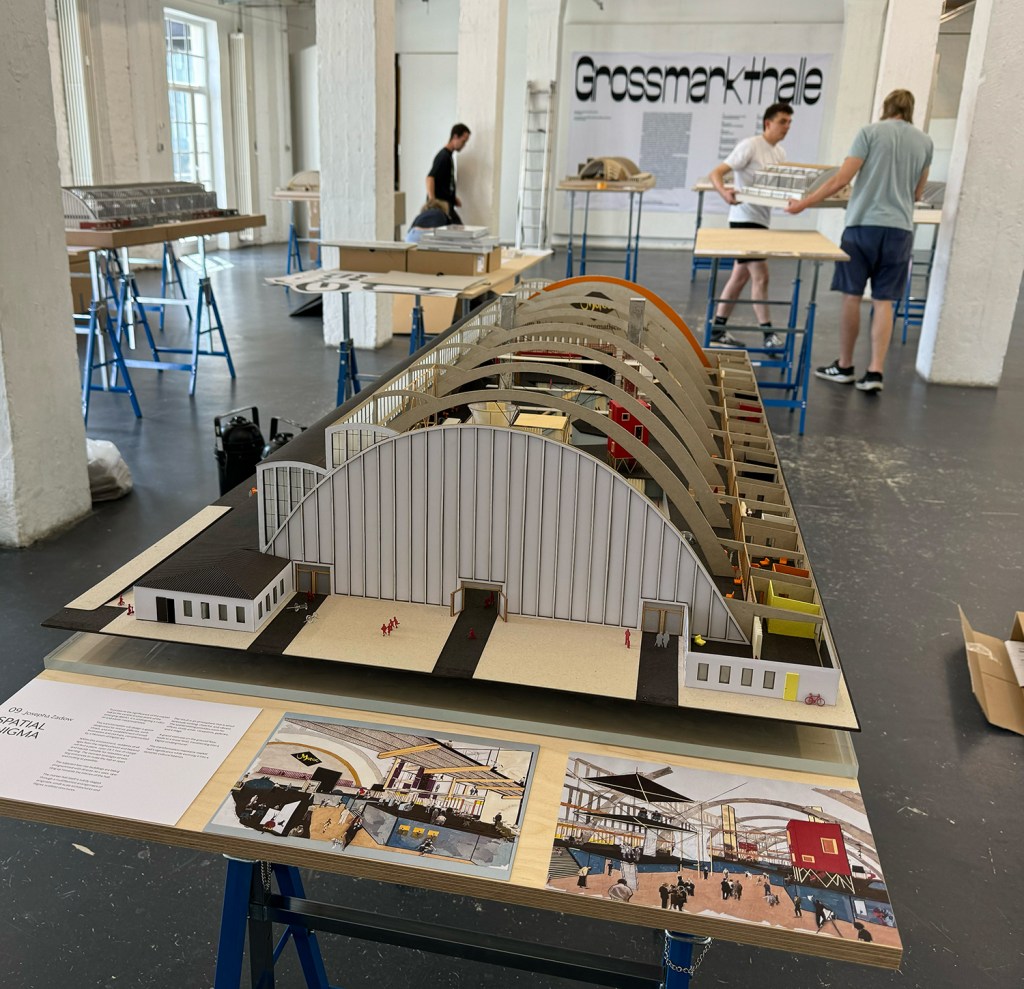
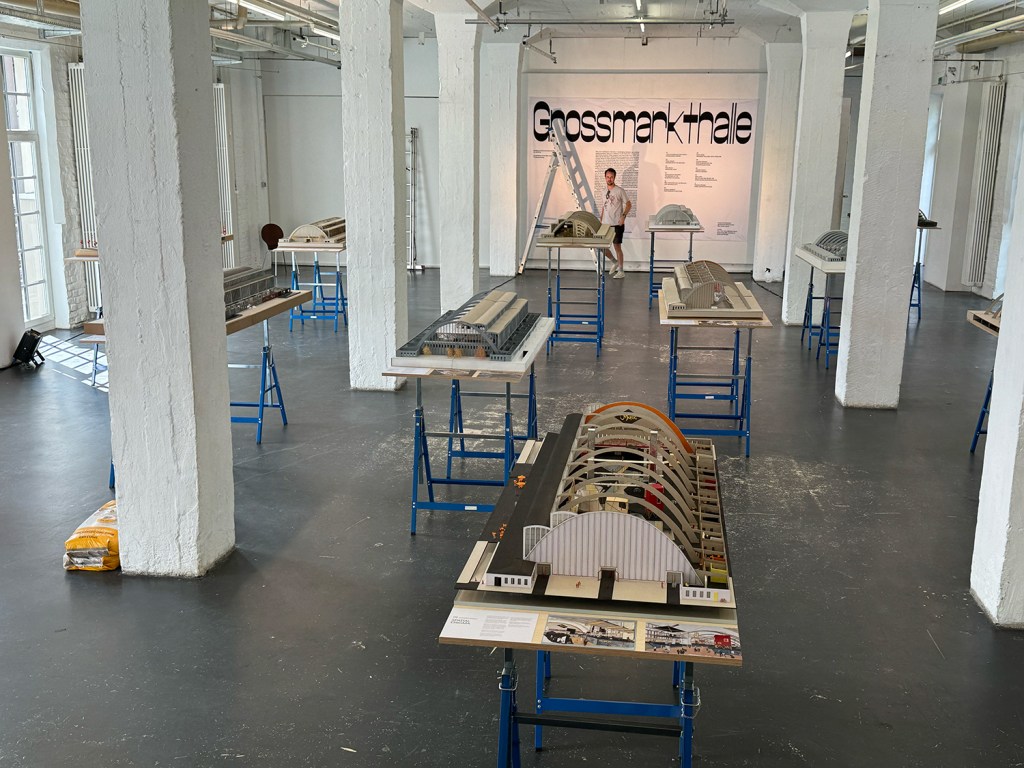
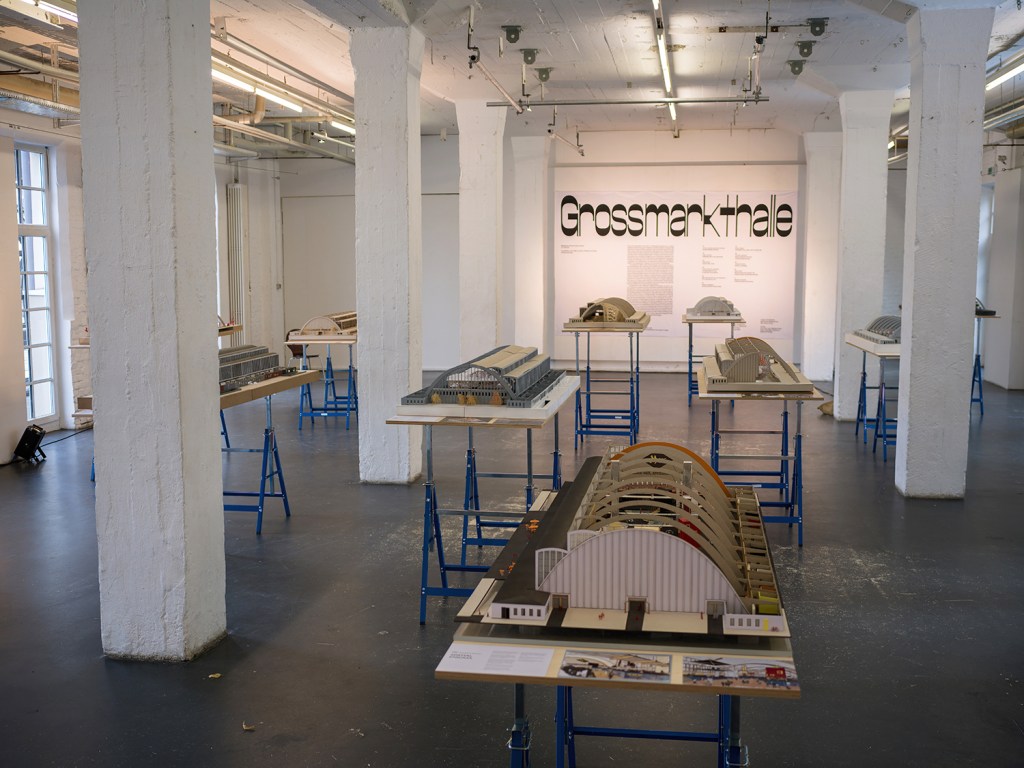
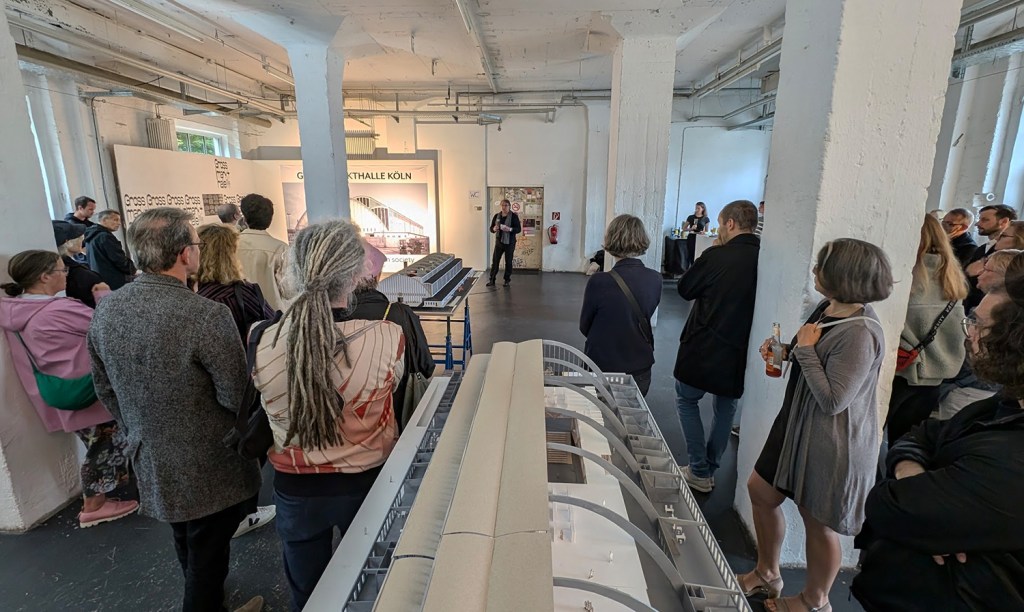
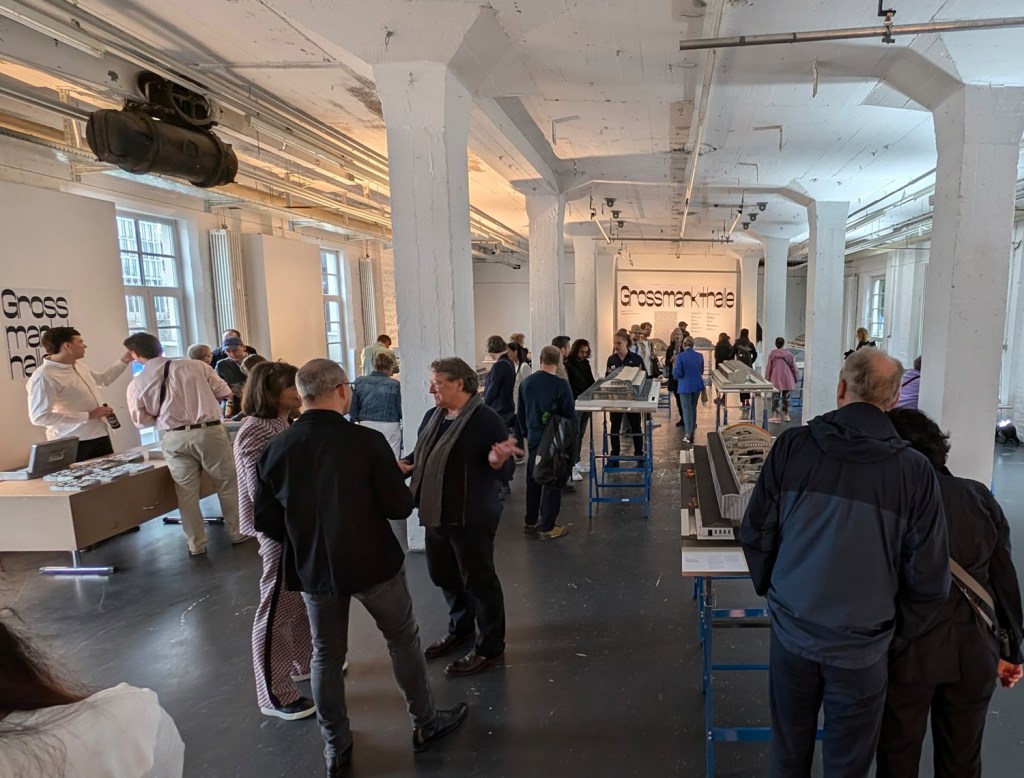
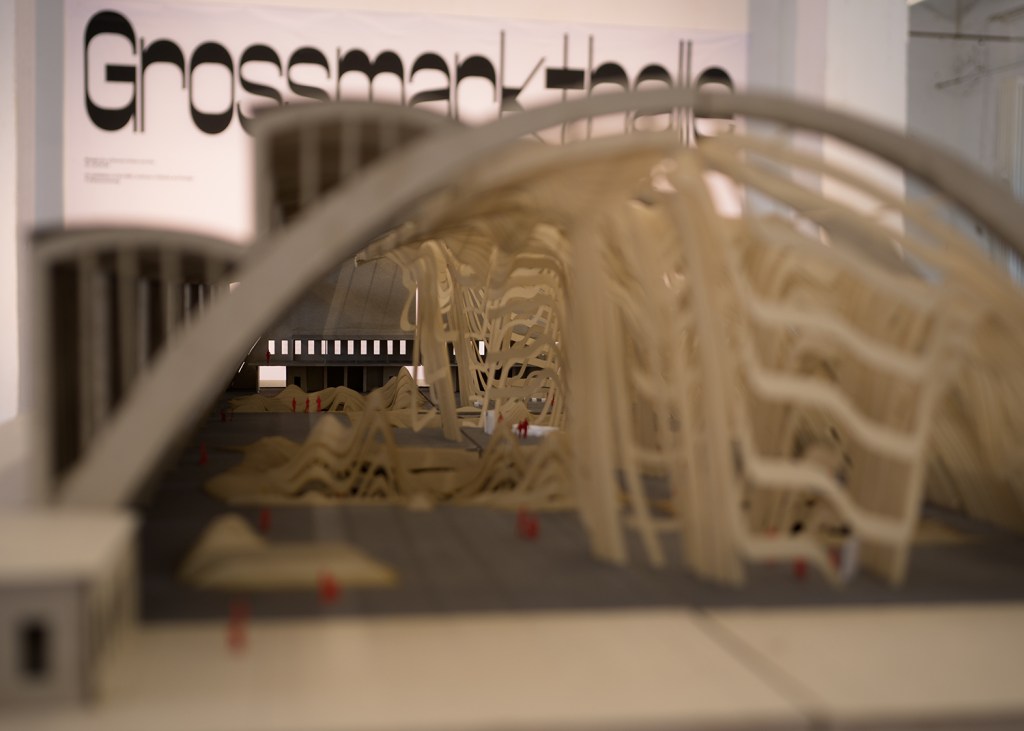
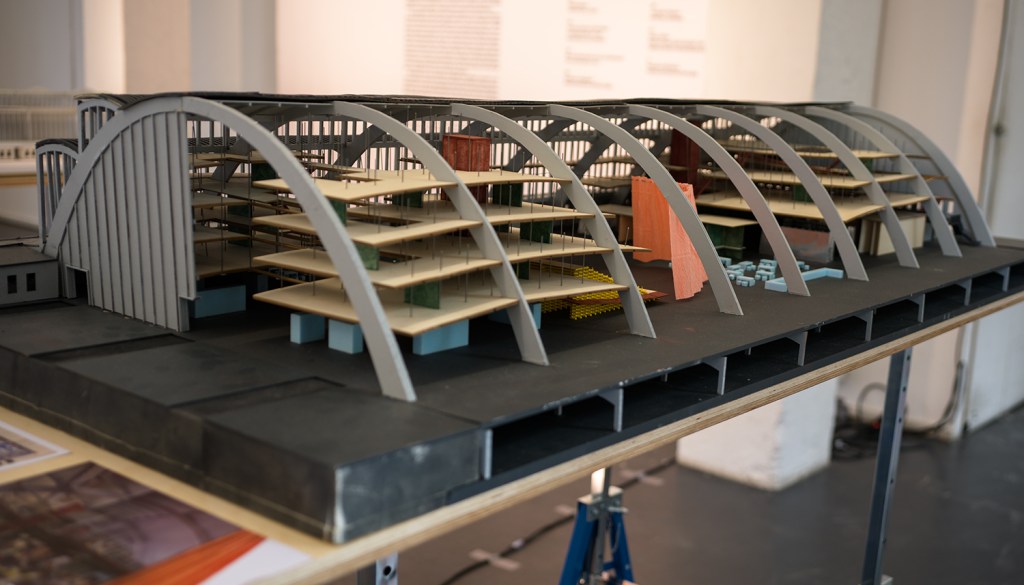
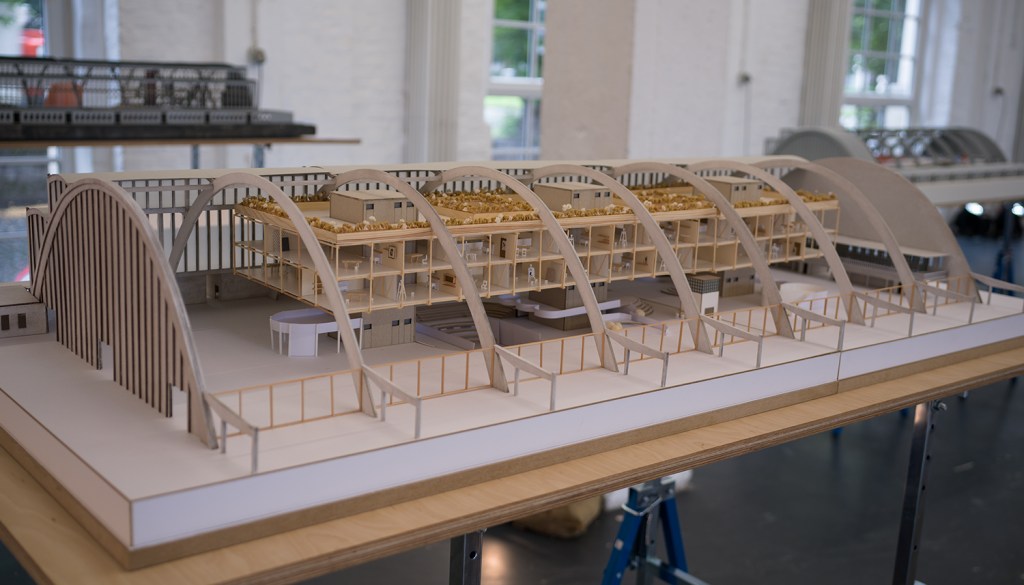
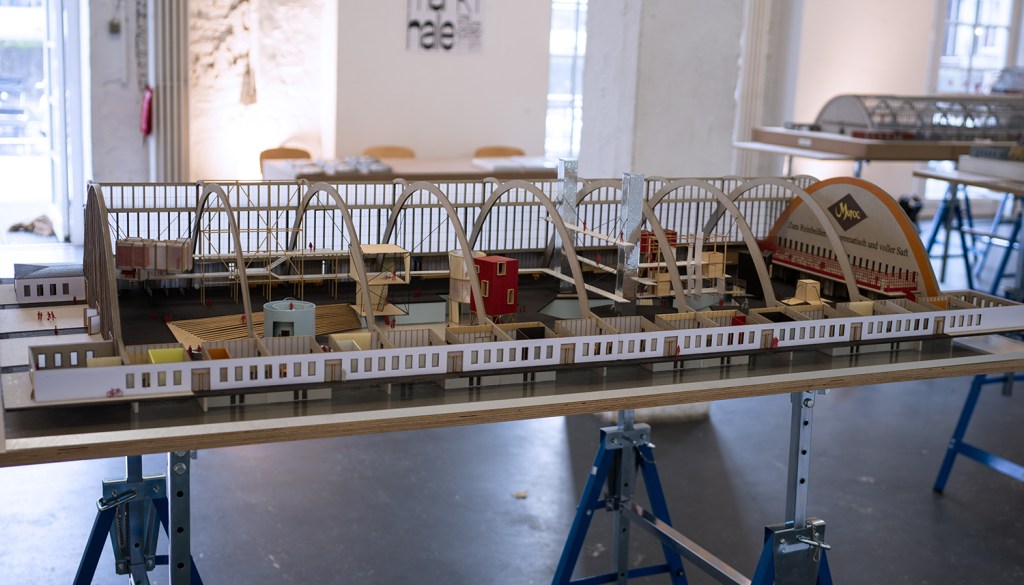
Students from the »Institute of Media and Design« at the Technical University of Braunschweig present a series of physical models that show alternative room atmospheres as well as sustainable and resource-saving proposals for the new use of the Großmarkthalle. Their goal is clearly defined: The Großmarkthalle is to become an attractive and urban-politically relevant cultural center in »Parkstadt Süd«. The designers are looking for answers to the question of what an urban society needs to make a place its social meeting place, its living room, its workshop. The personal communication of heterogeneous groups, especially after the challenging experiences during the coronavirus pandemic, is what makes such hybrid ‚multi-use‘ buildings so appealing. Comparable examples from Scandinavia or the Netherlands show us that it is essential for the success of such a community-building place that the programs and rooms are accessible daily and around the clock, can be booked online, are inclusive, cross-generational and, above all, free of charge.
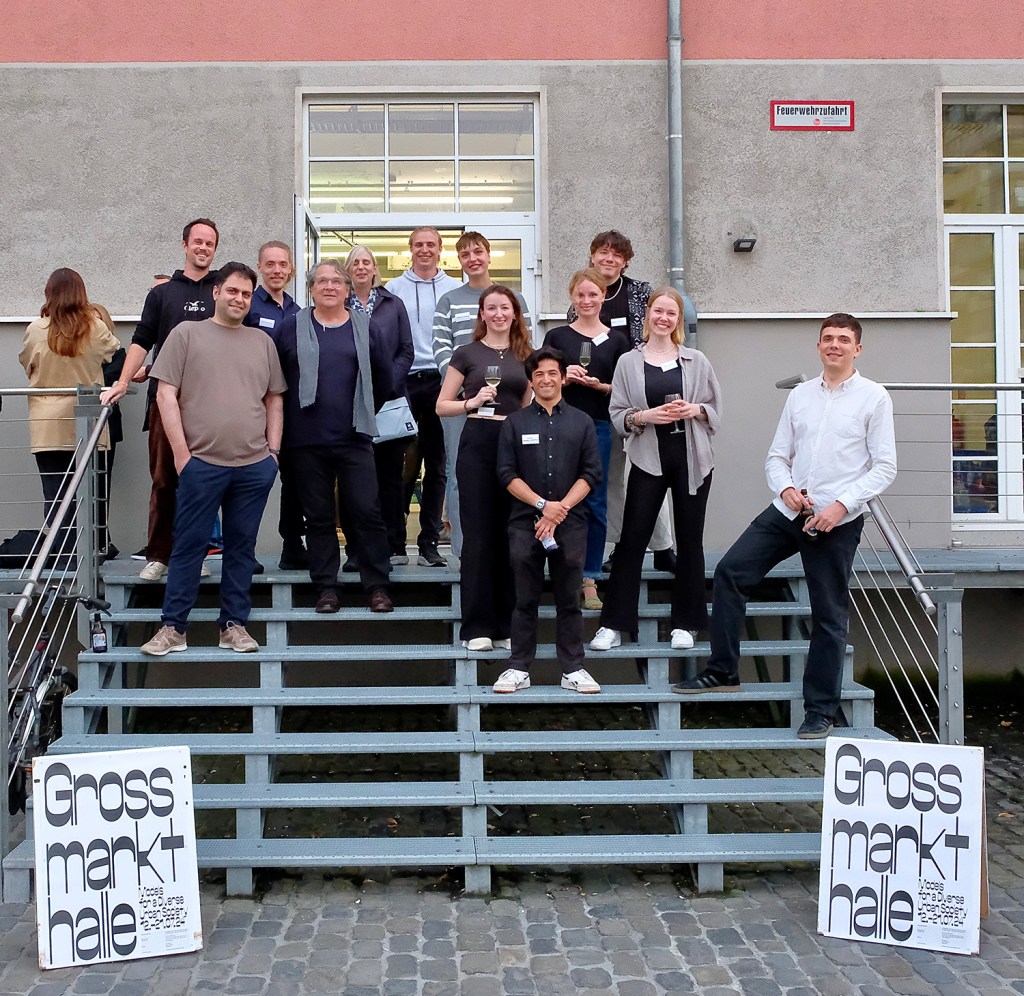
The students of the Department of Architecture at the Technical University of Braunschweig invite all interested parties to take a look at their alternative designs for the transformation of the Großmarkthalle Cologne.
The students and their projects
01 _Laura Lisowsky and Lara Lüchau _INFORMAL SHELVING UNITS
02 _Fiete Jantsch _DIGGING INTO THE GROUND
03 _Nele Aissen _ARTIFICIAL CAVE
04 _Carlos Zamora González »THIS IS NOT A ZEPPELIN«
05 _Mira Himmelrath and Lea Marquardt _CITY IN A MARKET HALL
06 _Ketevan Gujejiani _PARTICIPATIVE STRUCTURE
07 _Emma Zinga »WOODEN VILLAGE« WITH HIGHLINE
08 _Caroline Zessack _NEW STUDIOS FOR THE »KUNSTHAUS KAT18«
09 _Josepha Zadow _CONTINGENCY OR: THE SPACE COULD ALSO BE DIFFERENT
10 _Elias Letter _RECYCLING THE DEMOLISHED NEIGHBORHOODS
11 _Rebekka Windels PERPETUAL ROTATIONS
Credits
Project coordinators _Mohammad Reza Abdollahi Bidhendi and Max Justus Hoven
Coworkers _Leon Döring, Carlos Zamora González, Katrin Hellbach, Paul Hupp, Laura Lisowsky, Luise Siuts, Caroline Zessack
Visual communication _AUTOSTRADA STUDIOS _Max Pietro Hoffmann with Mohammad Reza Abdollahi Bidhendi
Our sincere thanks go to the entire KUNSTHAFEN team for their great support at all times.


Time-Based Design Processes in Architecture


Time-Based Design Processes in Architecture






 OZA _Studio for Architecture and Scenography